The Side Hustle Summit Is a $15 Funnel Into Higgsfield
There's an old rule of the internet: if you're not paying for the product, you are the product. The Iman Gadzhi and Russell Brunson "Side Hustle Summit" was free. A million hopeful beginners were the inventory, and Higgsfield, a $5.4-billion AI company racing to feed its own valuation, was the buyer. As we write this, Higgsfield is down.

There's an old rule of the internet: if you're not paying for the product, you are the product. This time, that product had a price tag of $15.
Before we start, here's what's solid and what's our read.
Confirmed: Higgsfield is down right now. On stage, Gadzhi said Higgsfield sponsors the summit. Getting into the "VIP" track means paying for a $15 Higgsfield plan. Higgsfield recently raised $400M at a $5.4B valuation. Every Higgsfield offense listed below is documented by Forbes and other outlets.
Our read: that the rush of new sign-ups is part of why the site is down, that the "free" summit is really a way to sign people up to Higgsfield, and that a much pricier tool was shown first to make $15 feel cheap. We flag each of these as we go, so you can judge them yourself.
Higgsfield is down, and a $6-million hype machine is pointed straight at it
Right now, higgsfield.ai greets visitors with a single word: "Oops."
A website going down is usually a shrug. This one is a story, because of what got aimed at it right before it fell over.
The Iman Gadzhi AI Summit (officially the "Side Hustle Summit," Sept 6-13) is one of the most heavily marketed online events of the year. Gadzhi reportedly told attendees they spent around $6 million on advertisment alone. Every dollar of it funneled one enormous audience toward one tool: Higgsfield. And as you'll see, subscribing to Higgsfield was the real price of admission. Point a flood of brand-new users at a platform that has struggled to stay online for months, and it buckles.
To be fair, Higgsfield has been shaky on its own for a while, so the summit probably isn't the only reason it's down. But it threw gasoline on a fire that was already lit, and the reason it did runs through the whole event.
The $15 "VIP ticket" is a Higgsfield Subscription
The side hustle summit is "free." The content is not. To get into the VIP track, attendees were told to buy Higgsfield's $15 "starter" plan, and in return the hosts would "cover" the VIP pass for them. Gadzhi pitched it from the stage as a gift: Higgsfield sponsors the event, so sign up for their tool and your VIP access is on the house.
That $15 is wrapped up to feel like a steal. It "unlocks" bonus workshops, hands-on training, giveaway entries, and raffles for MacBooks, private calls, even meetups with Brunson and Gadzhi. Peel the wrapping off and it's a checkout page. You are paying for a Higgsfield subscription, and it's being handed to you like a favor.
The $3,000 tool that makes Higgsfield's $15 look like nothing
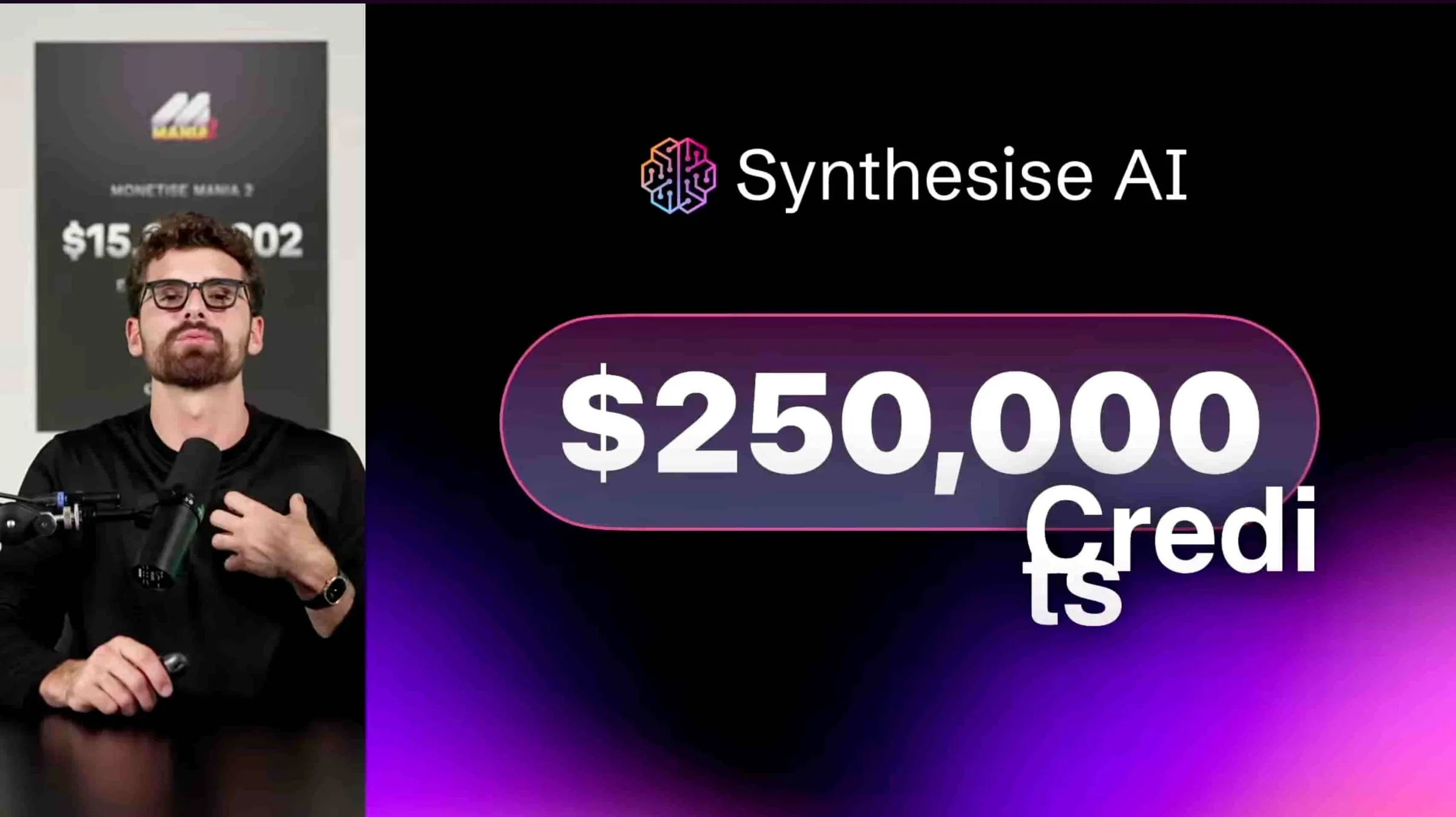
During the summit, the hosts also showed off a much pricier tool called "Synthesise AI," pitched at around $2,000 for lifetime, "unlimited" credits. (You already know how "unlimited" usually plays out with tools like these.)
Here's what we think... Synthesise AI has no prior traffic or search volume. Archived snapshots from Wayback Machine suggest it wasn't even fully-functional until mid-July. Flashing a $2,000 price tag first does one very handy thing for whatever comes next: it makes Higgsfield's $15 feel like pocket change.
Marketers have a name for this. It's called price anchoring: show someone a big number, and every number after it looks tiny. Nobody wants to drop $2,000 on a tool they've never touched. But $15 to dip a toe in, or $20, or $50, whatever feels safe to risk? That's easy. We can't prove that's the intent, but the setup is straight out of the playbook.
And $15 barely gets you in the door. That "starter" plan buys a small bucket of credits that empties in no time.
Why a $5.4-billion company needs your $15
Here's the math you don't understand.
Get one million people onto that $15 plan, and you've created $15 million in fresh revenue and a million new users, more or less overnight. Not through ads. Through the trust of two influencers people already follow. For you, it's fifteen bucks. For Higgsfield, it's a tactic to get to a higher valuation with shortcuts.
To see why that matters so much to a company already worth billions, you need the one number the entire AI industry obsesses over: annualized net revenue run rate. It's a magic trick with a spreadsheet. You take your best month of revenue, multiply it by 12, and call that your "annual" revenue run rate, even if you've only held that pace for a couple of weeks. One good month becomes a giant yearly headline, and it's the number founders put on their slides to make fast growth look even faster.
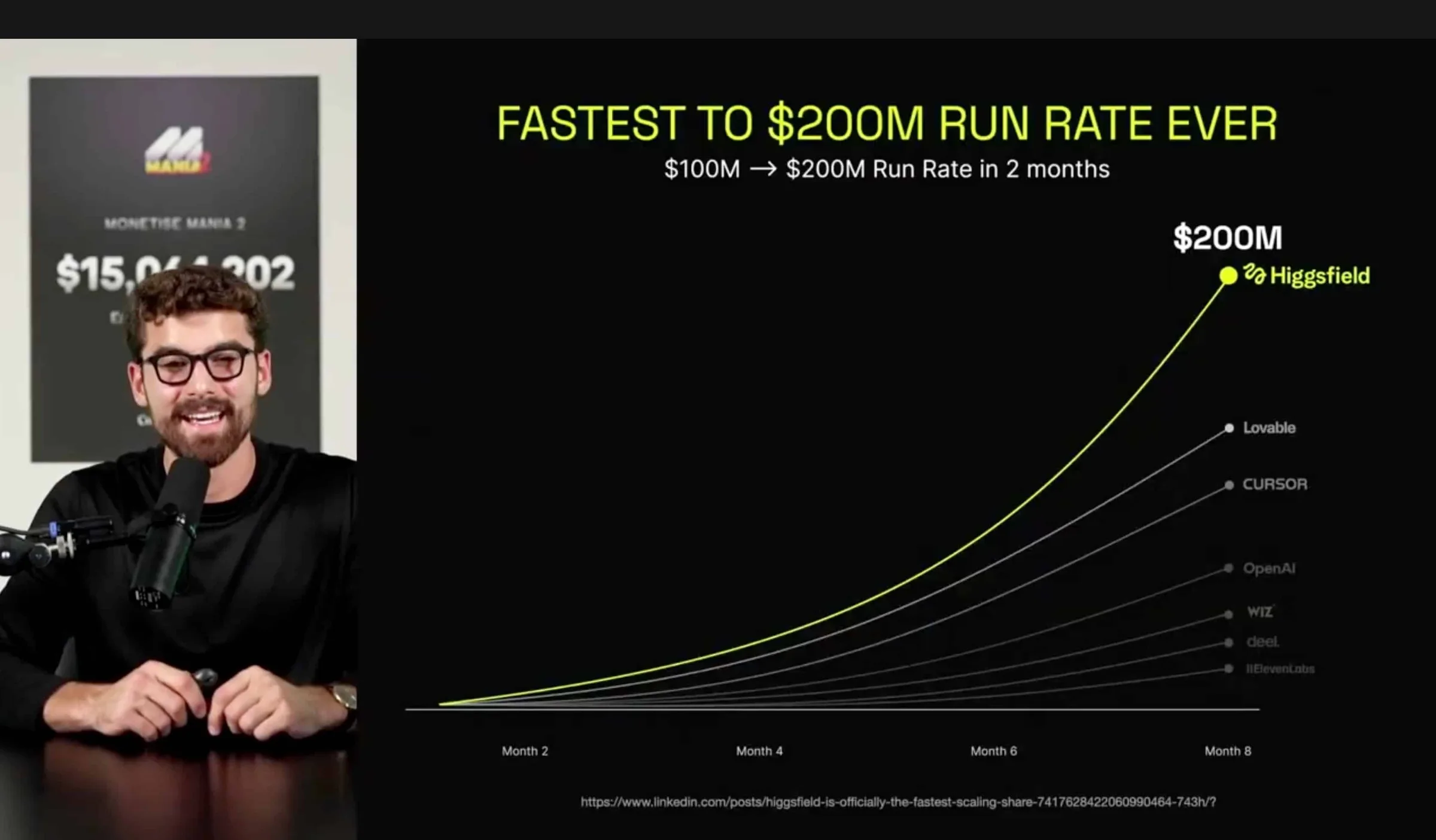
Now look at what Iman puts on screen at this very summit (above): a slide bragging "Fastest to $200M run rate ever," its line blasting past Lovable, Cursor, and OpenAI. This is a company that competes on how steep that line looks. And the stakes are enormous.
In August 2026, Higgsfield raised $400 million at a $5.4 billion valuation, led by DST Global, quadrupling its valuation in eight months and claiming $700 million in annualized revenue (TechCrunch, PR Newswire). A valuation that jumps four times in eight months is a promise to investors, and that promise comes due every month, paid in new users and new revenue.
That is what your $15 actually buys them. A million new subscribers is rocket fuel for the exact chart Higgsfield waves at investors, dropped at the exact moment it's racing to be the fastest-growing company in AI.
Which is why the "free" summit only makes sense once you stop seeing it as a class and start seeing it as a sign-up machine: a customer-acquisition channel dressed as a public service, with a $2,000 upsell waiting by the door on the way out. Gadzhi admitted the sponsorship on stage. What he left out is the number that actually matters: how much Higgsfield is paying to put a million beginners on its platform.
Six times Higgsfield chose growth over people
To be fair, Higgsfield itself is a fairly decent product, and plenty of people use it and love it. The problem has never really been the tech. It's the marketing, which has a long habit of running on claims the company can't actually back up. A co-founder even told Forbes, on the record: "We fully admit that we push the envelope... very explicitly, it's more controversial content that gets attention." (Forbes) The track record:
1. It sold "unlimited," then throttled you. People who paid for "unlimited" access, including Black Friday buyers, reported hidden throttling and collapsing speeds after they paid (WebProNews). Worth remembering the next time a $15 plan is sold to you as your creative studio.
2. It bragged about killing jobs, as marketing. Higgsfield boasted on X that its tool had "ended" 20-plus creative jobs, then wore the backlash like a badge (The Register).
3. It grew on racist and nonconsensual content. Forbes found promo kits sent to recruited creators that contained racist videos of children's characters and nonconsensual deepfakes of real public figures.
4. It faked its own product. Some "AI-generated" promo clips were reportedly stock footage lifted from Envato, with Higgsfield's logo slapped on top (Forbes).
5. It left creators unpaid, then banned them. Creators recruited for paid work reported going unpaid and getting banned with no explanation, and Higgsfield's own X account was suspended on Feb 9, 2026 (Forbes, No Film School).
6. It faked a film-festival premiere. Higgsfield hyped an AI short, "Hell Grind," as though it had premiered at the Cannes Film Festival. It hadn't. We took that one apart in detail: the AI film that faked its Cannes premiere.
A company with that track record, becoming the toll booth inside a "free" event for people from underprivileged parts of the world, with almost nothing to spare, is not a coincidence worth shrugging off.
The real question; should Iman Gadzhi be teaching this?
Gadzhi built his fame the modern way, by selling the blueprint to the business he says he runs. The label keeps changing. First agencies, then courses, now "AI side hustles." The business underneath never does: sell beginners the dream of getting rich, and get paid whether or not they ever do.
Scam accusations have followed him for years. We won't stamp that word on him as fact, because there's no lawsuit or fraud ruling. But the documented complaints are bad enough for someone selling himself as a teacher: subscriptions that are "very, very hard to cancel," non-refundable payments, and lessons that reviewers call "extremely basic... not exactly the value it pretends to be" (review).
The real question is simple. Should a man whose entire product is "pay me to learn how to get rich" be the one narrating a "free" event that ends with a $2,000 ask?
For an event built on teaching people how AI can change their lives, the summit itself was wall-to-wall AI slop: cheap, generic, obviously machine-made images and video filling the sessions. If the people selling the dream can't be bothered to make their own materials look good, it's fair to ask what you're really paying to learn, and whether the man on stage is the right person to be teaching it.
The audience already wrote the review
These are the real reviews, written by the exact people the ads were built for: viewers in the developing world for whom $2,000 is years of income, walking away feeling, in their own word, hopeless. In our opinion, calling this "education" is generous. It runs on the hope of people who can least afford to lose it.
"A 2-hour intro... What did I learn? The Mbappe special."
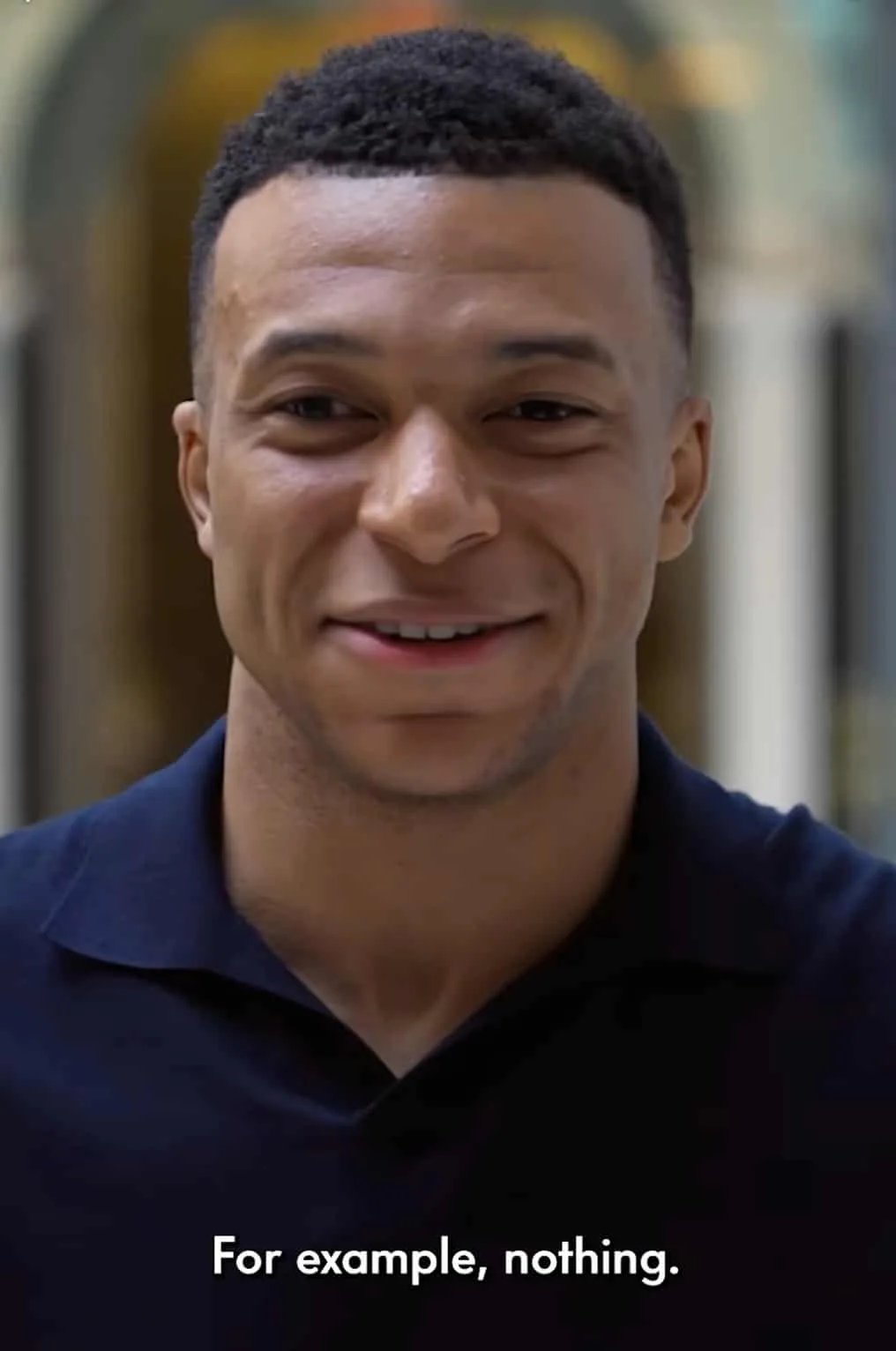
Real viewer comments under the summit's videos, calling the $2,000 ask years of family income.
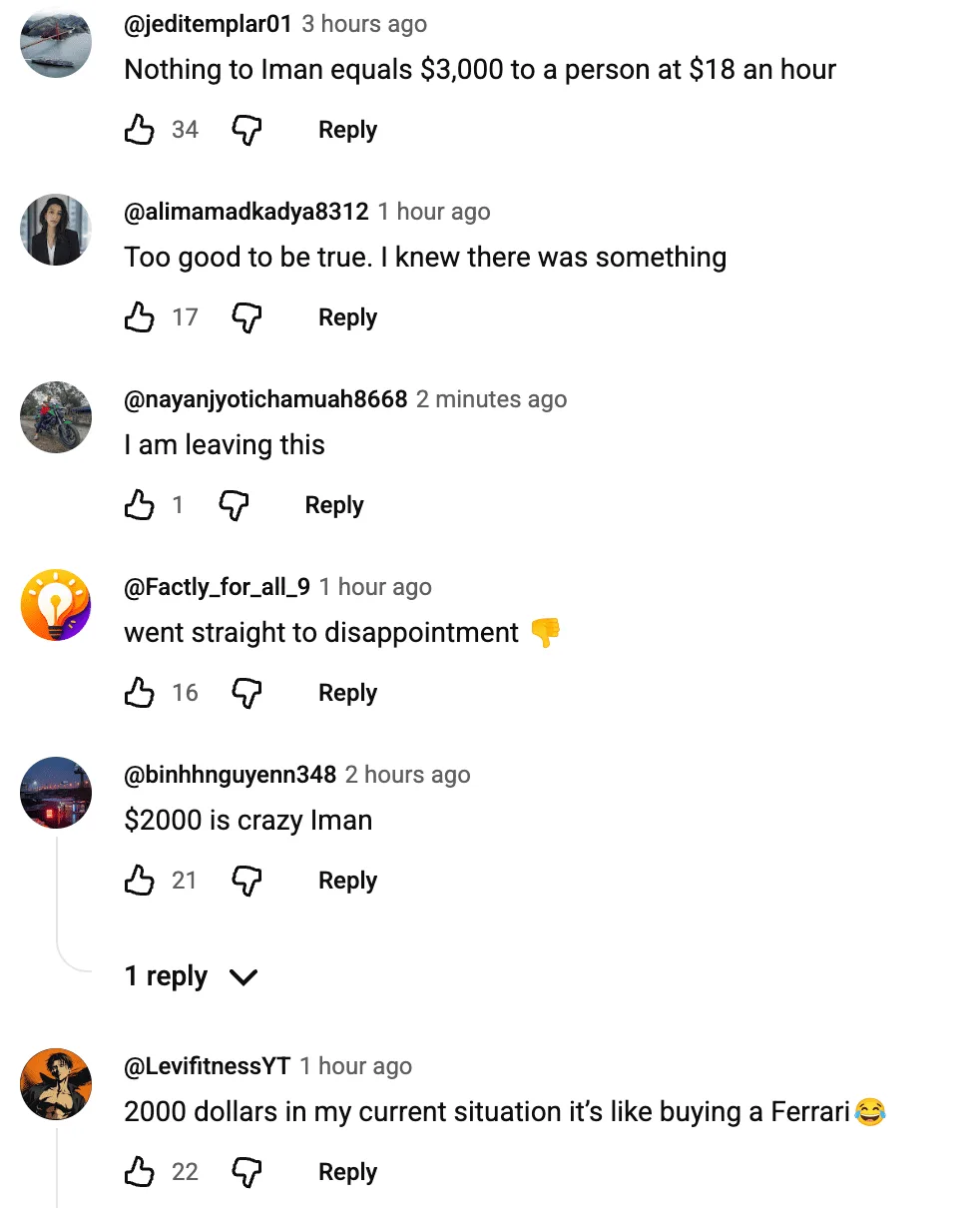
Comments on the Side Hustle Summit video 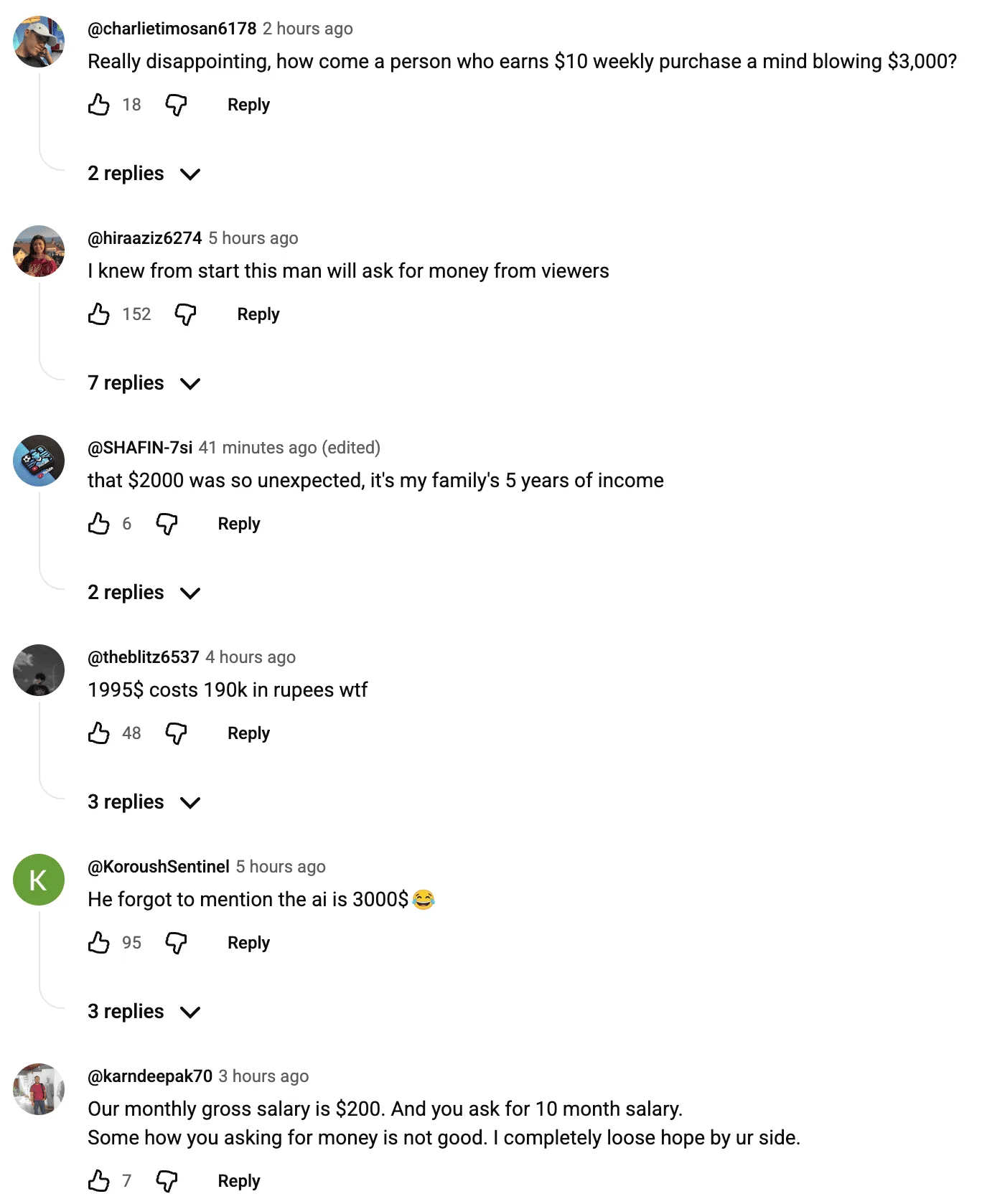
Comments on the Side Hustle Summit video 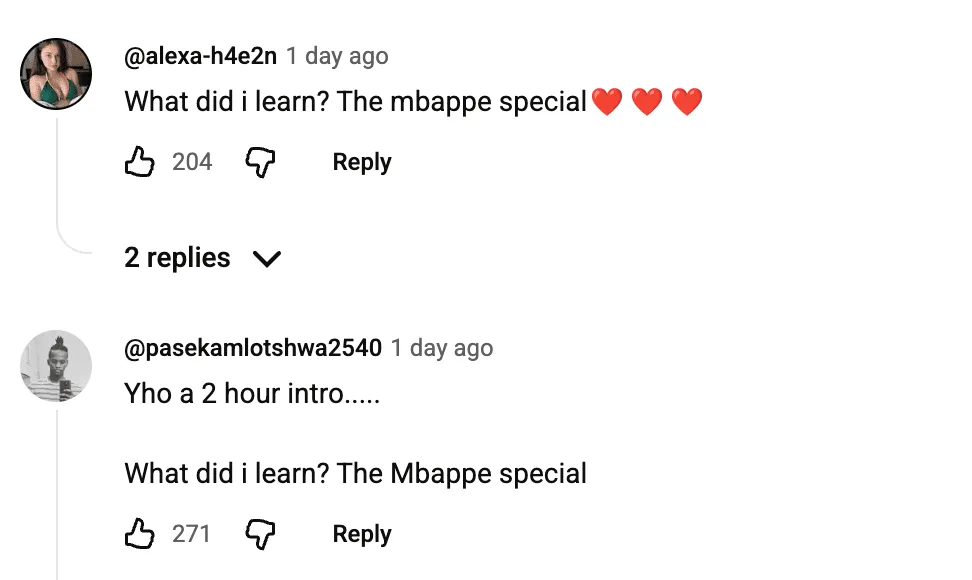
Comments on the Side Hustle Summit video 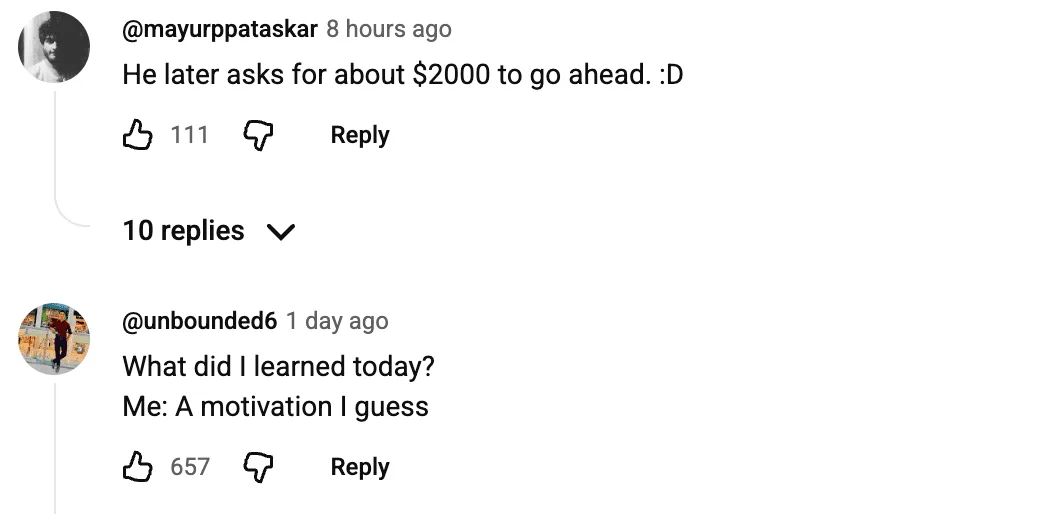
Comments on the Side Hustle Summit video
What the FTC's own rulebook says about "$373 a day, no experience"
In 2021 the FTC formally warned more than 1,100 businesses that lying about how much money people can make can cost up to $43,792 per violation (FTC). The exact tricks it called out are this summit's playbook: exaggerating what a normal person will earn, promising you need no experience, and pushing you to act right now. Then reread the promise the whole event was sold on: "$373 a day, in 5 days, with AI, no experience." Three for three.
There's a second rule too. The FTC says any paid relationship between a promoter and the product they're pushing has to be disclosed clearly and openly (FTC endorsement guides). Saying "we partnered with Higgsfield" names the sponsor, but it hides the deal: who pays whom, and how much, for a million sign-ups. That gap is the whole game.
The verdict
Here's the simplest way to see it. Two people wanted your money, and the "free" summit was how they got you in the room.
Higgsfield wanted the $15. Not once, but every month, as the credits run out and the renewals pile up, all of it feeding a company now worth $5.4 billion that grows by signing up new subscribers as fast as it possibly can. Gadzhi wanted the $2,000, for his "Monetise" program, pitched right at the end, when everyone in the room was at their most hopeful. We still think it was only price anchoring and the goal was to make purchasing Higgsfield look sensible.
Neither of them broke a law. But look at who was actually there: people who said, in the comments, that $2,000 is years of their family's income. They showed up looking for a way out and left hopeless. Higgsfield's site will be back online soon enough. But this hopelessness is not going anywhere anytime soon.
Remember, when something is free, you're the product. This time you were priced at $15. To everyone on that stage, you were worth a lot more than that.
 Trending
Higgsfield's Hell Grind: The AI Film That Faked Its Cannes Premiere
Hell Grind is a real technical leap and a real piece of marketing dishonesty at once. Inside the $500K AI film, the fake Cannes "premiere," and what it proves.
Kamran Arshad Monetization
How to Make Money With a Faceless AI Channel
A hands-on guide on how to make money with AI faceless channels, the tools required to getting started, and all the monetization methods.
Kamran Arshad8 min.webp) AI Faceless Channels
AI Faceless Channels12 Best Faceless AI Channel Ideas That Actually Make Money
Twelve faceless AI channel ideas with the money engine spelled out for each, real earning examples, and five videos to post for every one.
Kamran Arshad13 min