The Best AI Filmmaking Platforms
A model makes a shot. A platform makes a film. Twelve studios that take you from idea to finished cut, what each one is best at, and the models worth running inside them.

AI filmmaking platforms put an entire film studio at your fingertips. Dedicated production workspaces, cinematic templates, ready-made storyboards, consistent characters, precision camera controls, and sound design tools give you the freedom to direct every frame exactly as you imagined it. Here are the best AI filmmaking platforms for creators who want more than a few seconds of generated footage.
- 01
Higgsfieldbest overall and the most complete studio4.4
- 02
Dreaminabest for getting Seedance 2.5 first
- 03
Kling AIbest if your work is mostly Kling4.5
- 04
Runwaybest for editing and refining shots4.3
- 05
OpenArtbest for long, consistent stories4.0
- 06
ImagineArtbest for vertical dramas3.9
- 07
Artlistbest if you need licensed stock
- 08LTLTX Studiobest for script-to-storyboard previz
- 09
InVideobest agent that makes the film for you3.7
- 10
Magnificbest for upscaling and finishing3.8
- 11
Kreabest for finding the look
- 12
Leonardobest inside a Canva workflow
The short answer
Best overall: Higgsfield. The full pipeline, from storyboard to sound, under one plan.
Best for Seedance 2.5: Dreamina, where ByteDance's newest model lands first.
Best for Kling 4.0: Kling AI, straight from the source.
Best for long, consistent stories: OpenArt Director.
Best for series and vertical drama: ImagineArt's Film Studio and AI Drama Studio.
New to the process? Start with our complete guide to AI filmmaking, then come back to pick your studio.
The best AI video models for filmmaking
Every AI filmmaking platform here runs on the same handful of video models, so it helps to know them before you pick a studio. The most used video models in AI filmmaking right now are mentioned below:
1. Seedance 2.5.
ByteDance's newest model, released July 31, 2026. It makes 30-second clips in a single pass, takes image, video and audio references, and tops OpenArt's public arena leaderboard.
2. Kling 4.0.
Kuaishou's flagship, released in full on October 15, 2026. It makes 30-second clips in 4K with HDR and takes up to 15 reference images, which makes it the strongest pick for long, high-resolution shots.
3. Wan 3.0.
Alibaba's model, launched August 24, 2026. It makes 30-second clips up to 1080p and is the cheapest of the three: Alibaba lists it at $0.10 a second at 720p, well under what Seedance 2.5 costs. It is the value pick when you are generating a lot of takes.
Google's Veo 3.1 and Gemini Omni, MiniMax H3 and Black Forest Labs' Flux 3 are worth knowing too and used widely for certain use cases beside AI filmmaking.
The best AI filmmaking platforms
Twelve studios, each ranked by the job it does best. Every pick is a platform you can make a whole film inside, not a single-model generator.
1. Higgsfield: best overall and the most complete studio
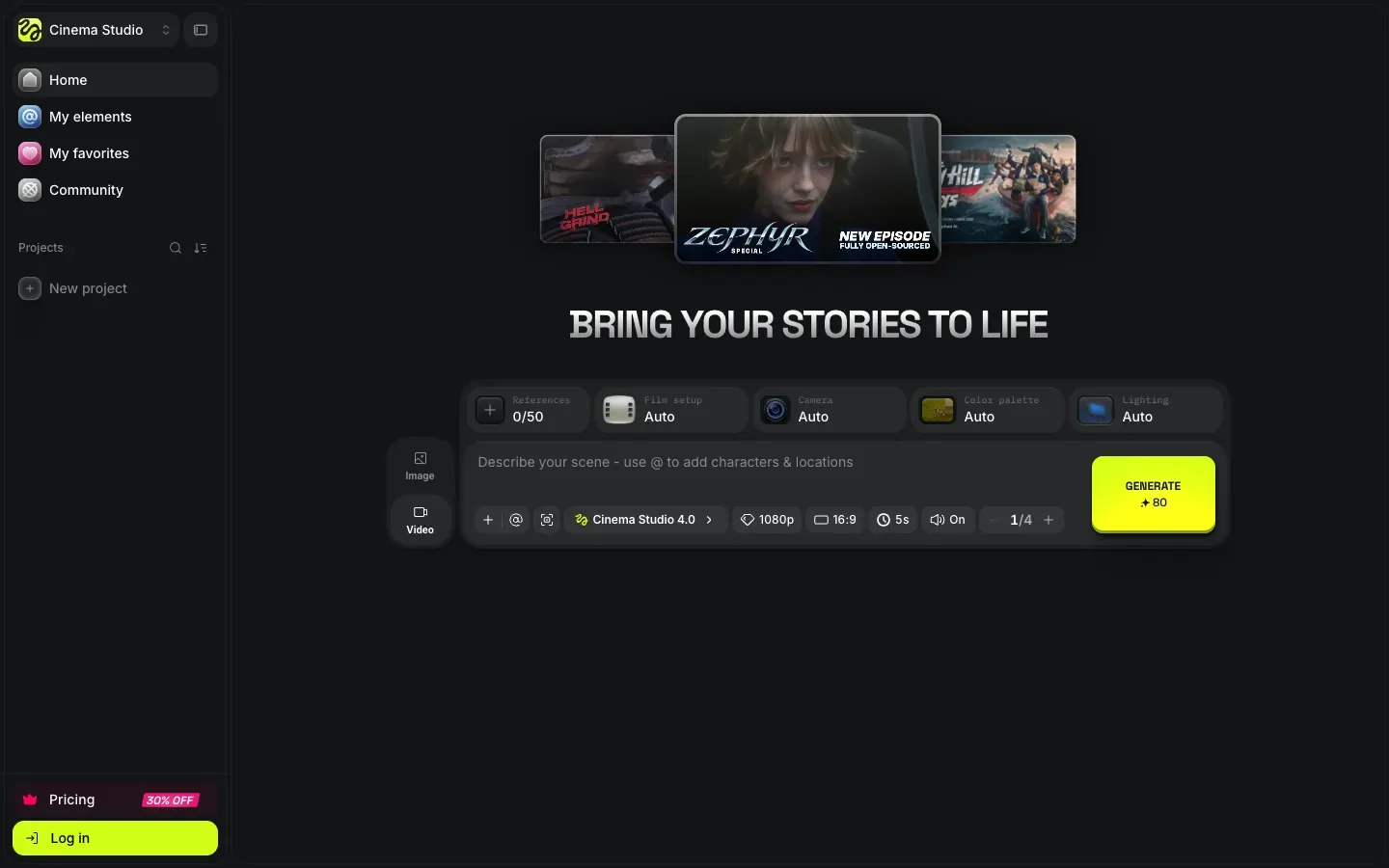
Higgsfield is the most complete AI filmmaking studio on this list and the cheapest way into it. Cinema Studio gives you a virtual camera, lens and focal length before a frame renders. Popcorn storyboards a scene as a consistent frame sequence. Soul ID locks a character's face across every shot, and Seed Audio handles sound. Its Supercomputer agent can run several of those stages from a single brief.
Marketing Studio sits alongside for ads, so the same account covers your film and its trailer. Plans start at $9 a month on yearly billing, and all the leading models, Kling 4.0, Seedance and Wan included, run under one credit balance.
Choose Higgsfield if you want one place to go from idea to cut without stitching tools together. Compare it head to head in Higgsfield vs OpenArt.
2. Dreamina: best for getting Seedance 2.5 first
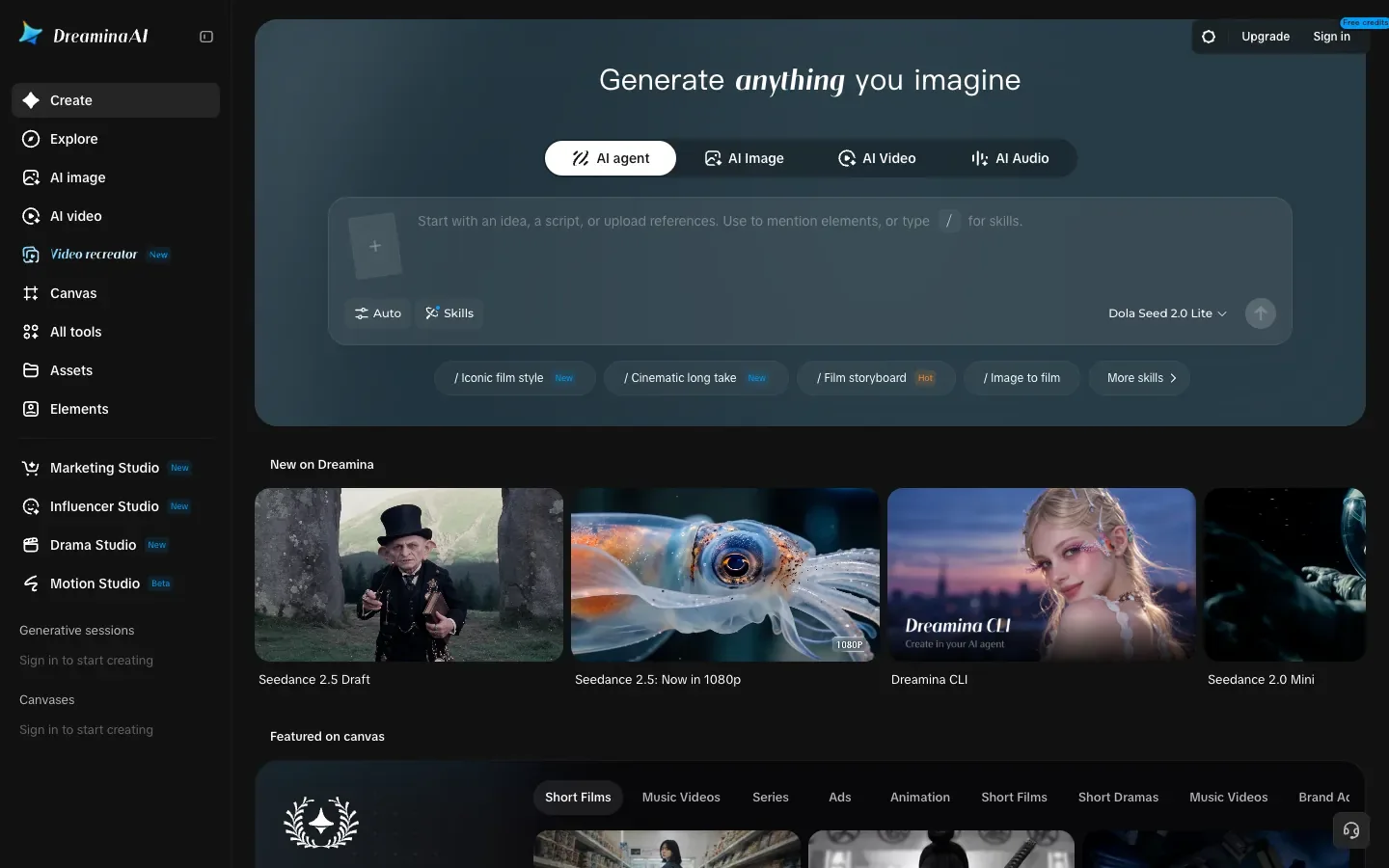
Dreamina is ByteDance's creative platform, from the team behind CapCut. Seedance 2.5, one of the strongest video models for filmmaking right now, launched here first, and new ByteDance models keep landing on Dreamina before anywhere else. Seedream 5.0 covers your stills, and the edit continues in CapCut.
Choose Dreamina if Seedance 2.5 is your main model and you want it first, at launch pricing, in a studio built around it.
3. Kling AI: best if your work is mostly Kling
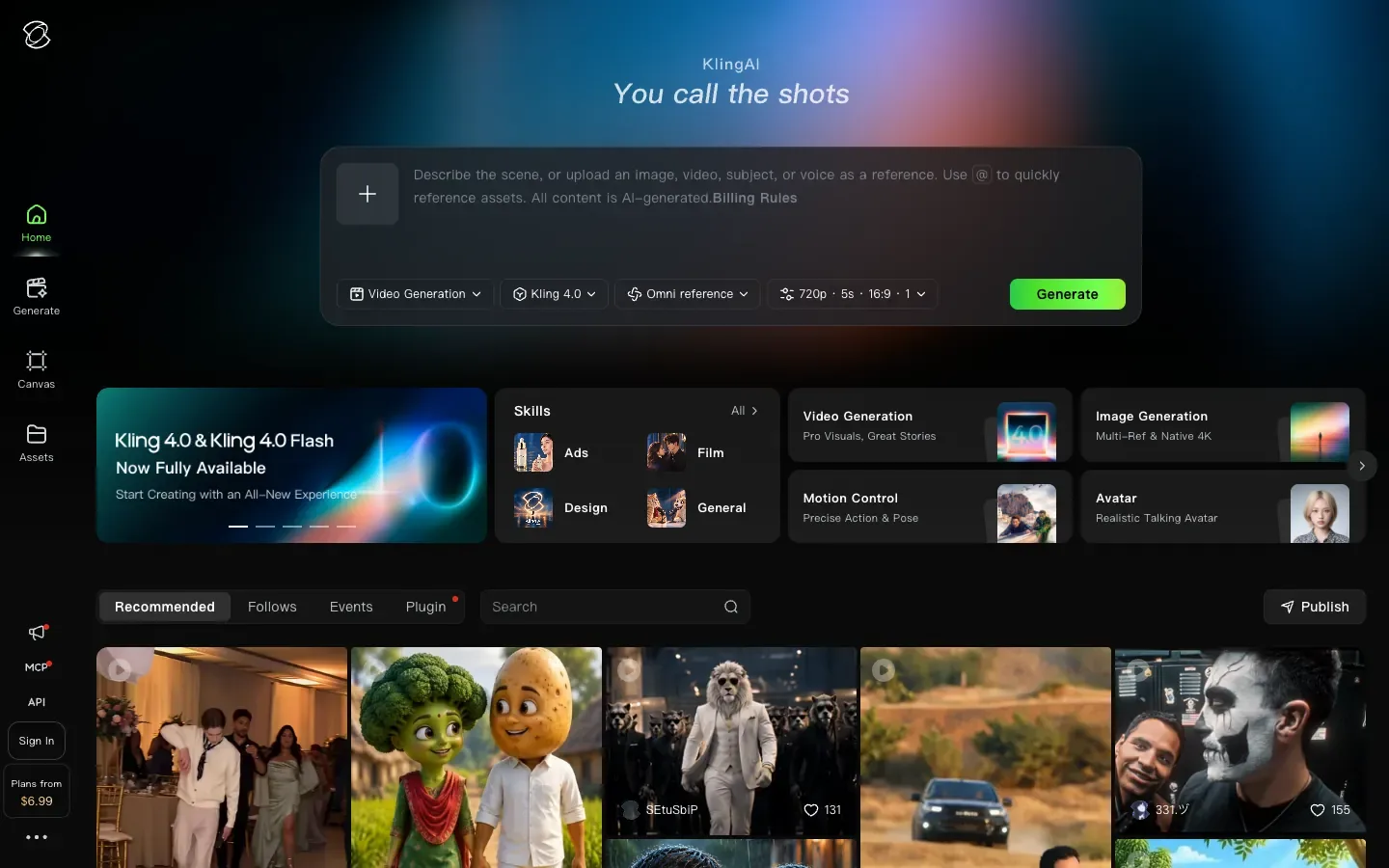
Kling AI is Kuaishou's own app and the first place Kling 4.0 shows up in full: 30-second, 4K HDR clips with up to 15 references, plus multi-shot and lip-sync tools. It is a single-model studio, so you give up model choice, but you get every Kling feature the day it ships.
Kling AI is right for you if your work is mostly Kling, not Seedance. If Kling 4.0 is the only model you need, get it straight from the source for the best price, with every feature the day it ships.
4. Runway: best for editing and refining shots
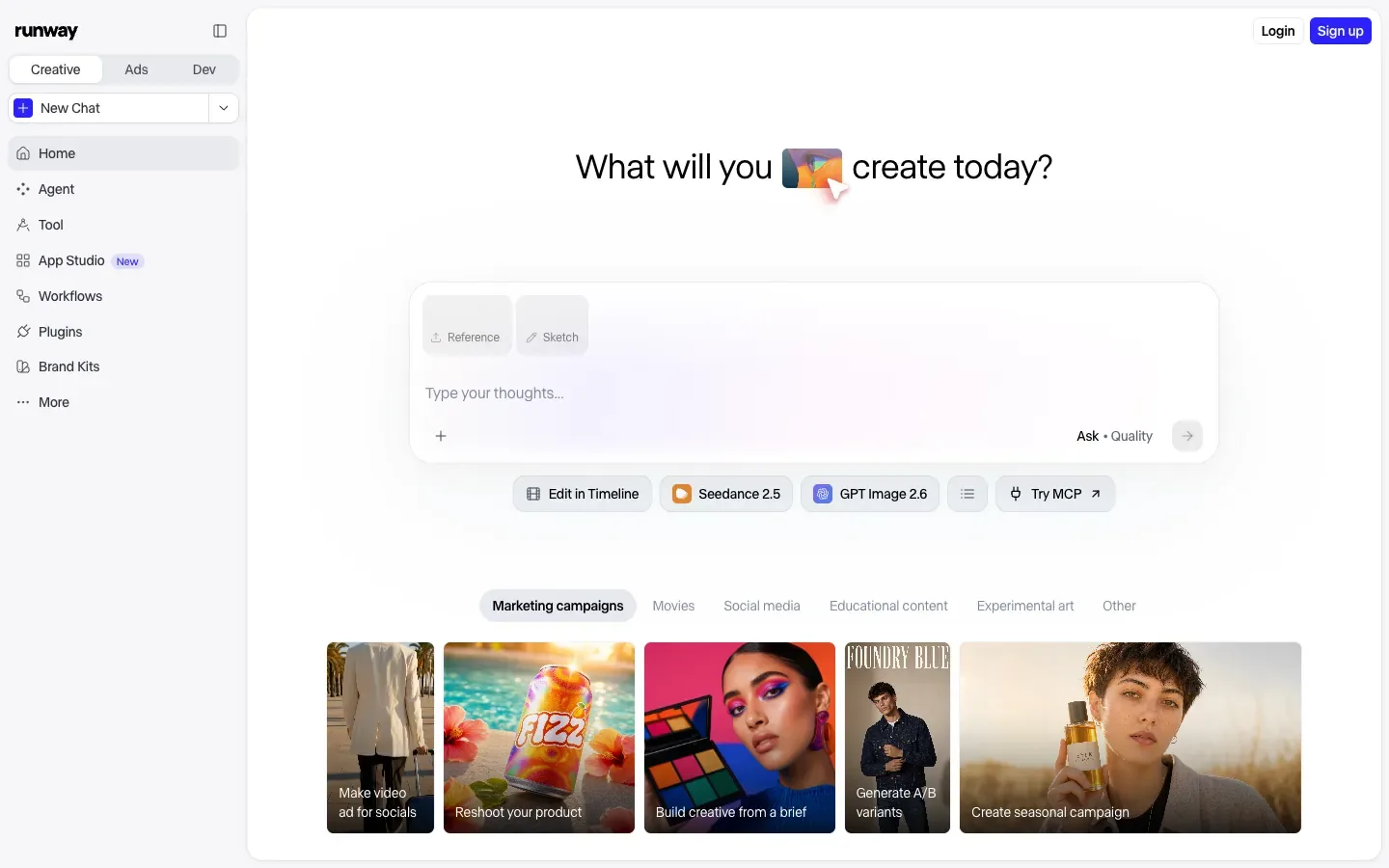
Runway puts generation next to a real editing timeline, with tools to inpaint, remove objects and adjust motion after the fact. It sits closer to post-production than any other platform here.
Choose Runway if you edit and refine AI footage rather than accept the first take. For pure editing tools, see the best AI video editors.
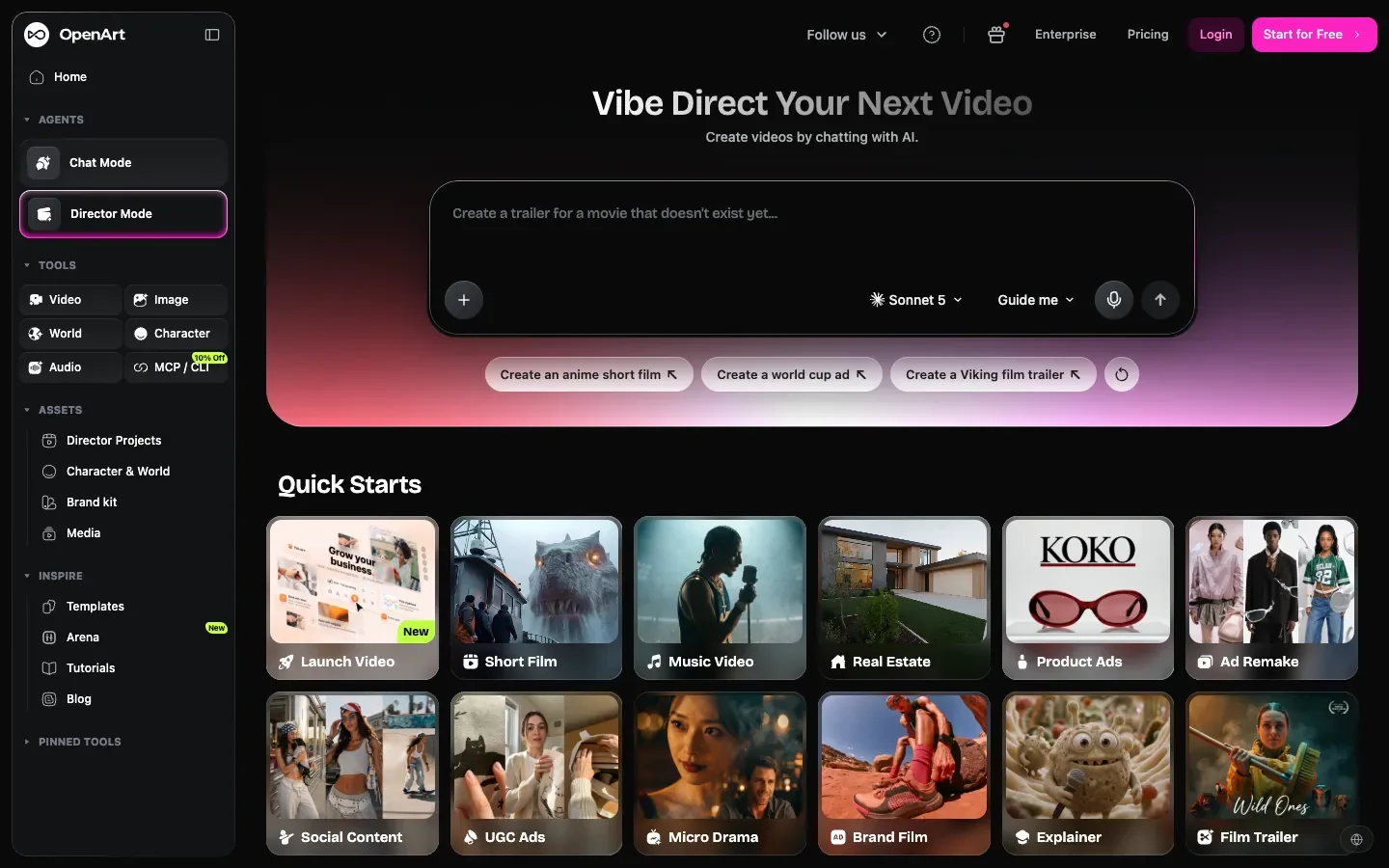
5. OpenArt: best for long, consistent stories
OpenArt's Director, launched in June 2026, is built for the hardest part of AI film: keeping characters, voices and the world consistent across a whole story. You describe the film and give notes in chat, the way you would to a crew, and Director builds sequences of up to five continuous minutes.
It is also one of the easiest places to compare models: OpenArt runs a public arena leaderboard, a quick way to see which model leads before you spend credits.
Choose OpenArt if your project is a story with recurring characters and you would rather direct scenes than prompt individual shots. Also, it let's you generate up to 5 minutes of short films with a single prompt.
6. ImagineArt: best for vertical drama
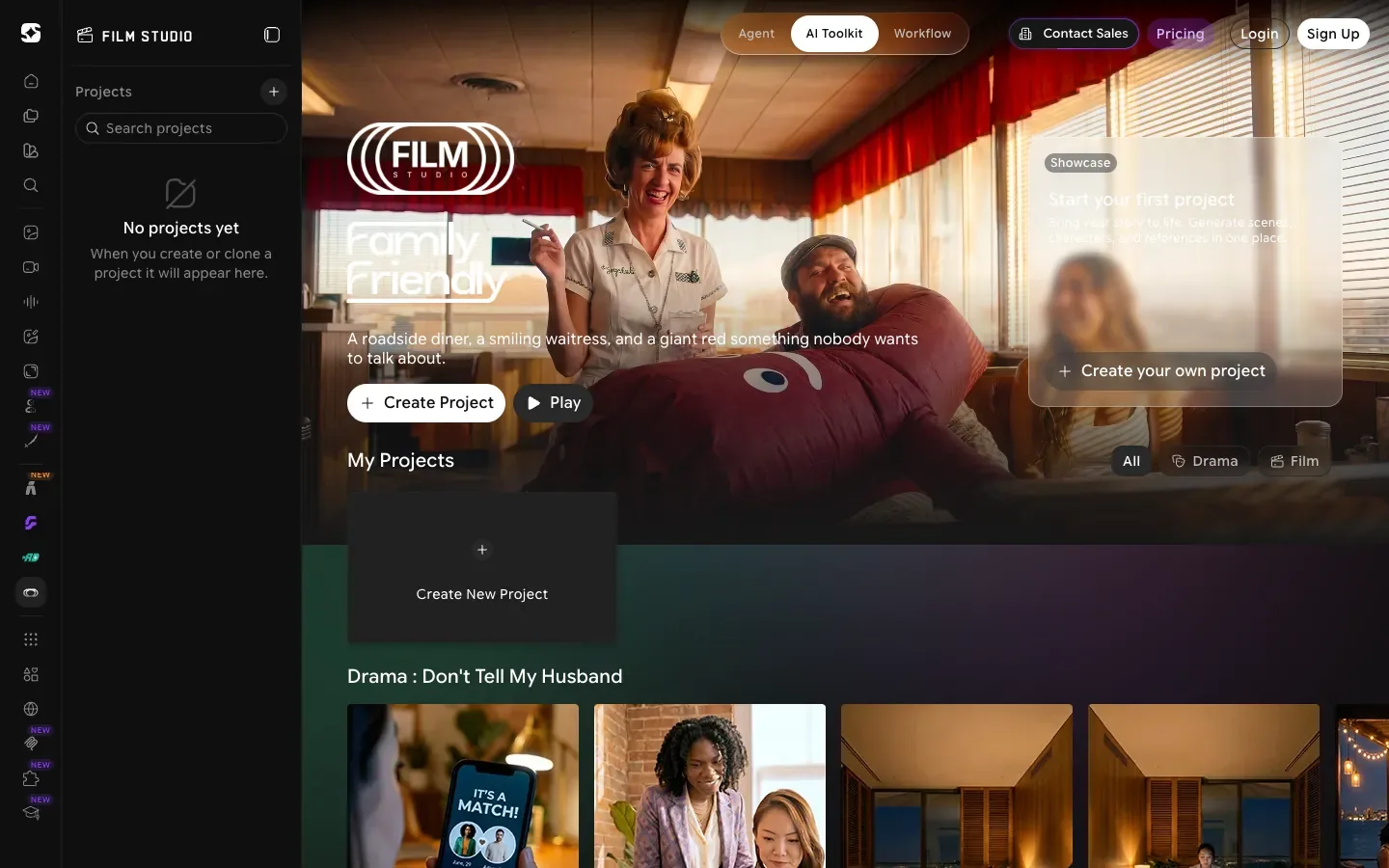
ImagineArt has two studios for filmmakers. Film Studio structures a project into scenes and shots. AI Drama Studio is built for vertical 9:16 series, with saved character voices so an episode sounds like the last one. Seedance, Kling and Veo all run inside it, with a node workflow for repeatable pipelines.
Choose ImagineArt if you are making episodic or short-drama content for mobile, where consistency from episode to episode matters more than one perfect shot.
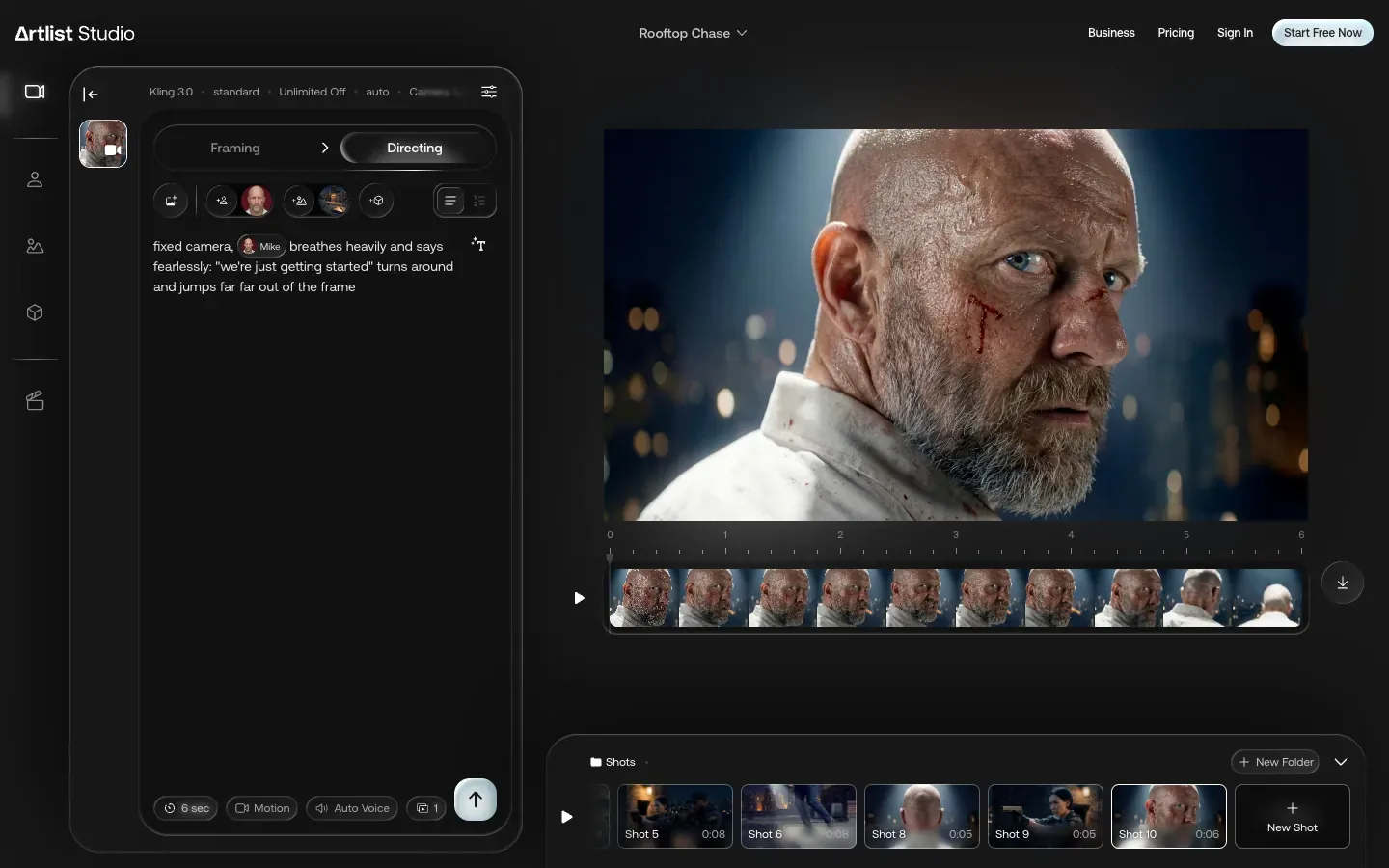
7. Artlist: best for pros who already license stock
Artlist Studio, launched in April 2026, adds shot-by-shot control on top of the latest video models, next to Artlist's music, sound effects and footage library. Everything you need to finish a cut lives in one licence.
Choose Artlist if you already use it for music and footage and want AI shots in the same, cleared workflow.
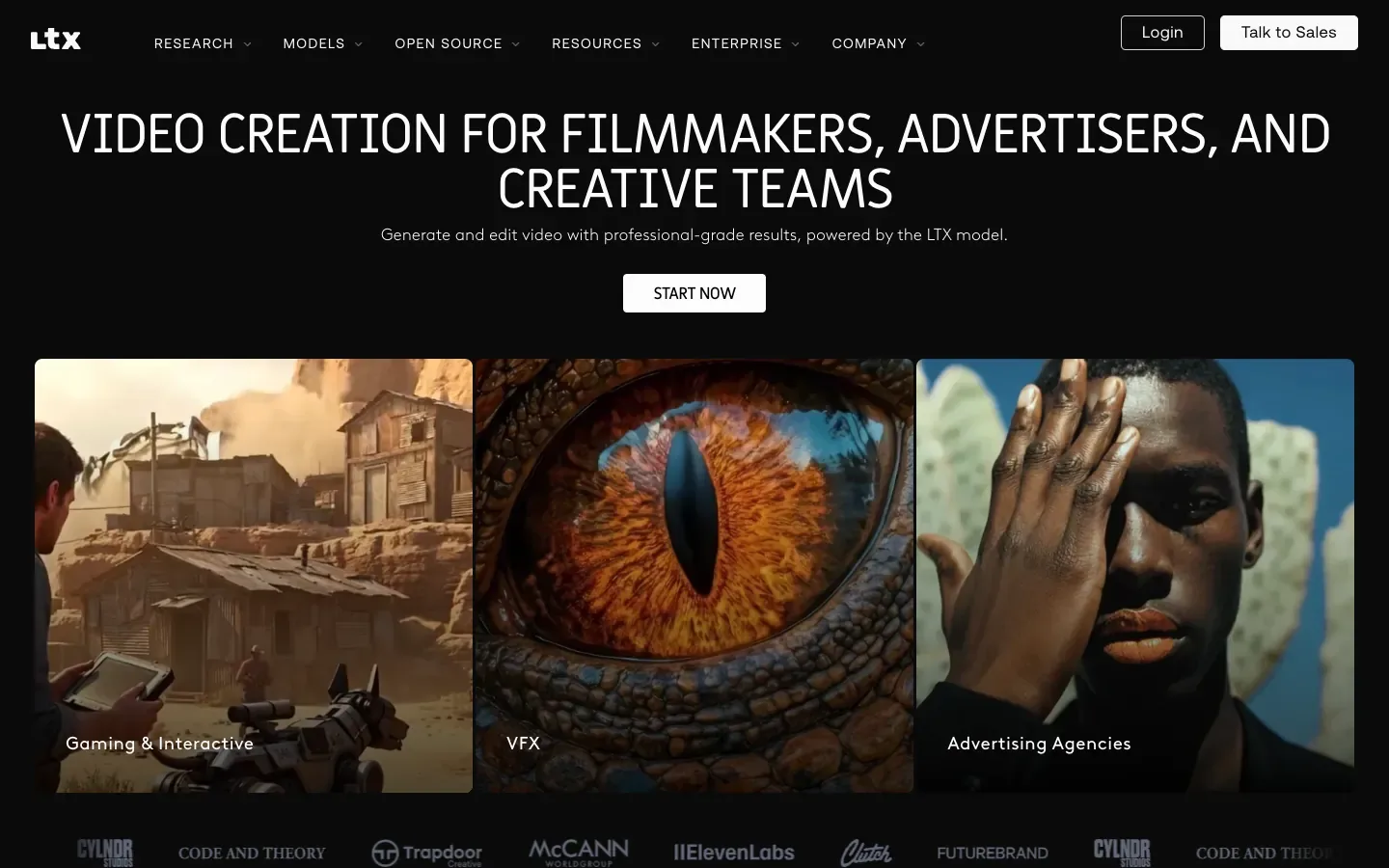
8. LTX Studio: best for script-to-storyboard previz
LTX Studio, from Lightricks, turns a script into a full storyboard with consistent characters, then lets you direct and regenerate it shot by shot. It is the closest thing to a traditional previz-to-production workflow, and there is a free tier to try it.
LTX Studio is ideal if you think in scripts and want to see the whole film laid out before you spend credits on final shots.
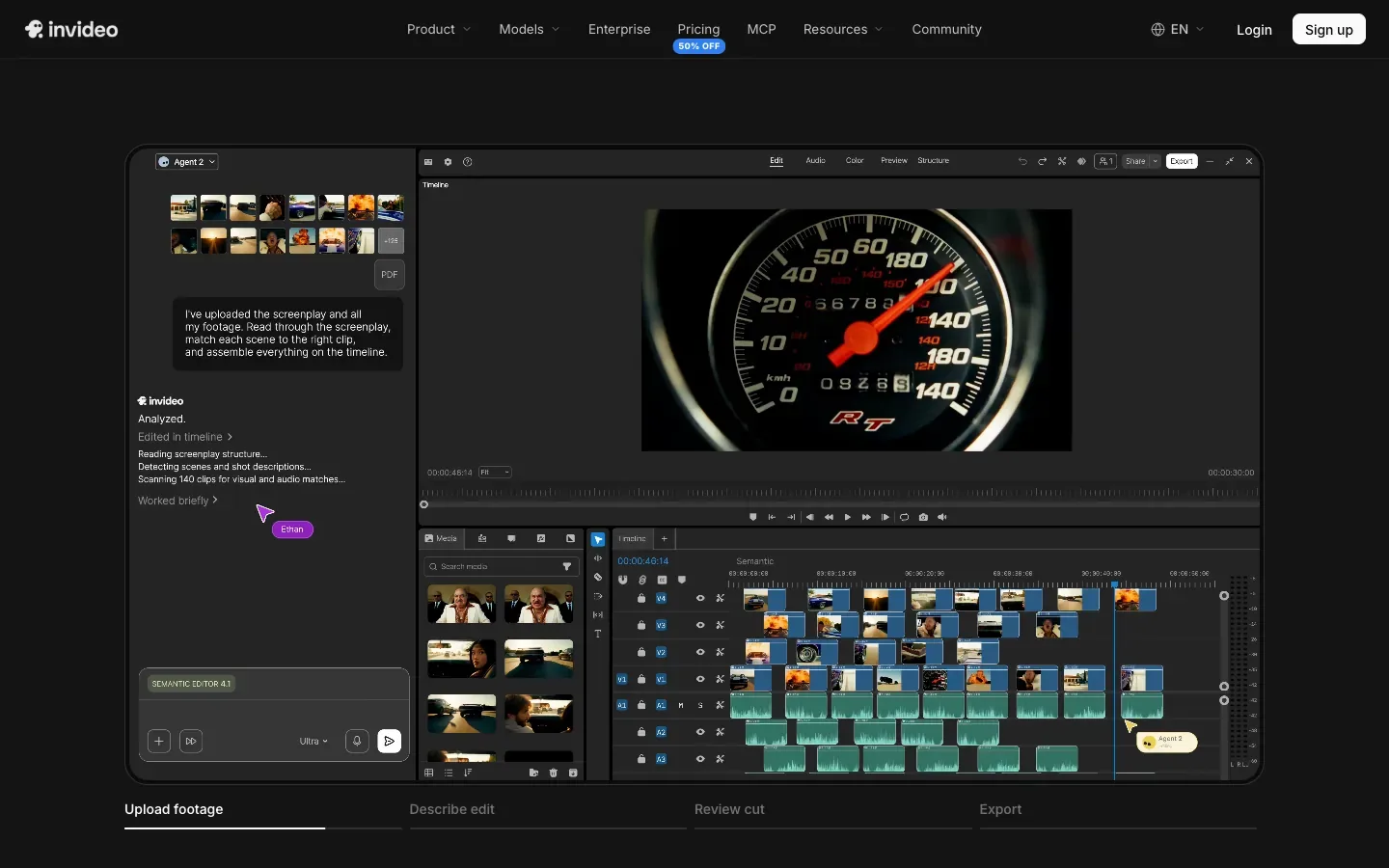
9. InVideo: best AI agent that makes the film for you
Invideo's Agent One breaks down a script, builds the storyboard, generates the shots and adds voice. Agent Two, released this summer, added reusable workflows and expert agents. InVideo also partnered with Google Cloud on a filmmaking platform for studios.
Choose Invideo when you want to hand over a brief to an agent and edit the result, rather than direct every shot.
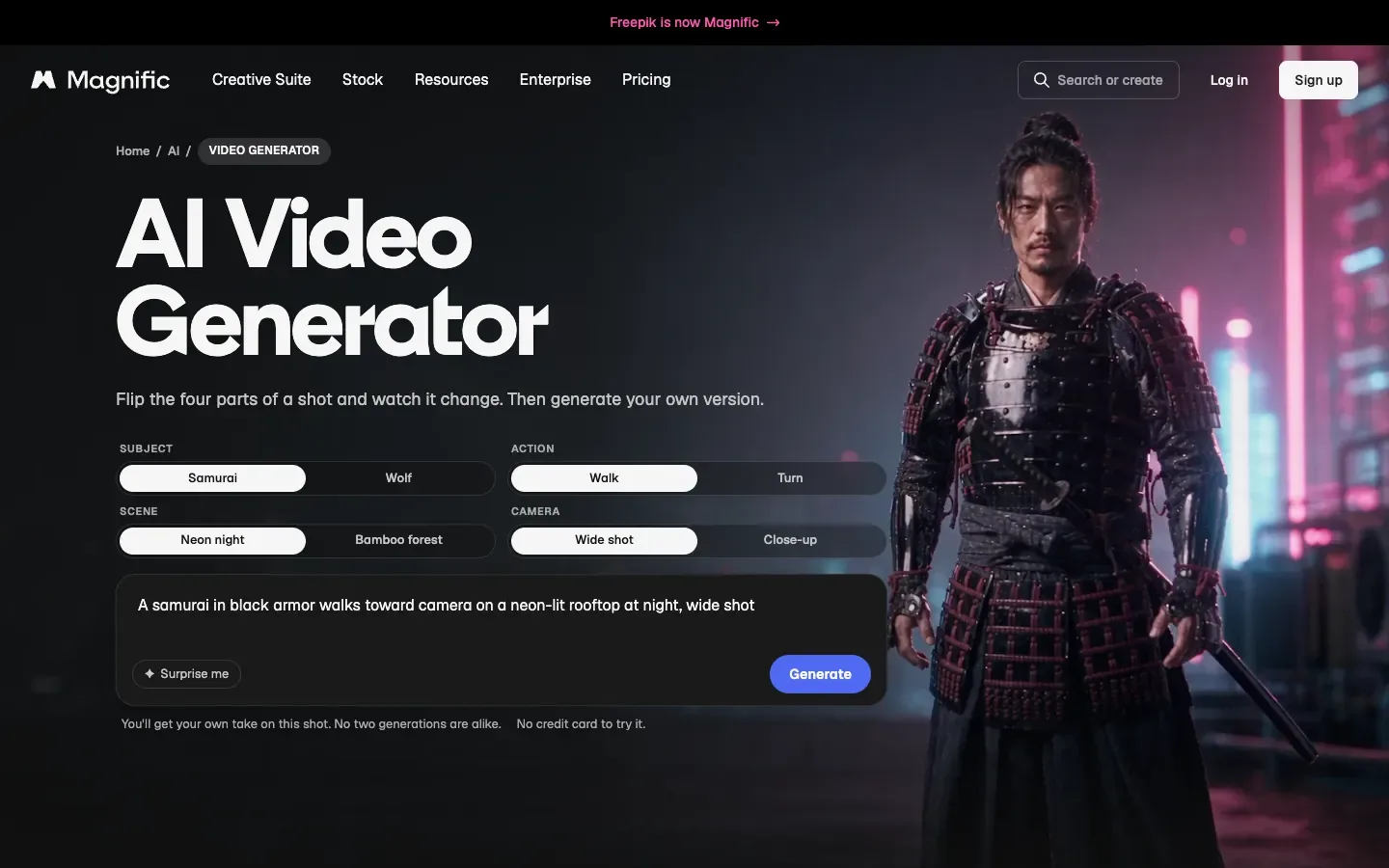
10. Magnific: best for upscaling and finishing
Freepik's AI suite now runs under the Magnific name. Alongside the leading video and image models, it brings Magnific's upscaler, which is the standard tool for sharpening AI frames and footage before delivery.
Choose Magnific as your AI filmmaking suite if you want one subscription for generation and a high-end finish on every frame.
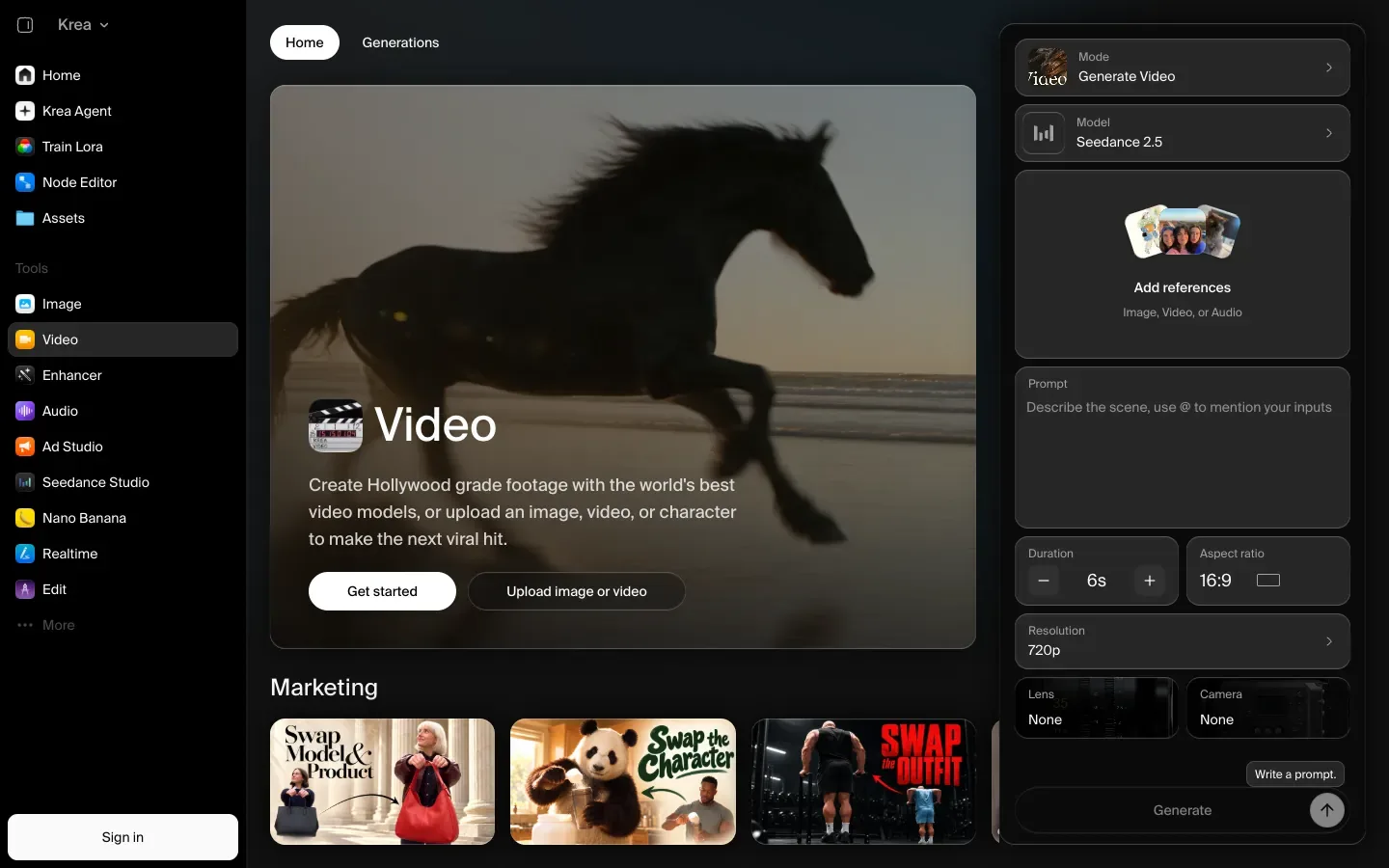
11. Krea: best for finding the look
Krea runs Veo 3.1, Kling, Seedance and Runway in one place, with a real-time canvas and, since February 2026, real-time video editing. It is the fastest way to explore a visual style across several models before you commit.
Krea is good for AI filmmaking if you are moodboarding a film and want to see the same idea across models side by side.
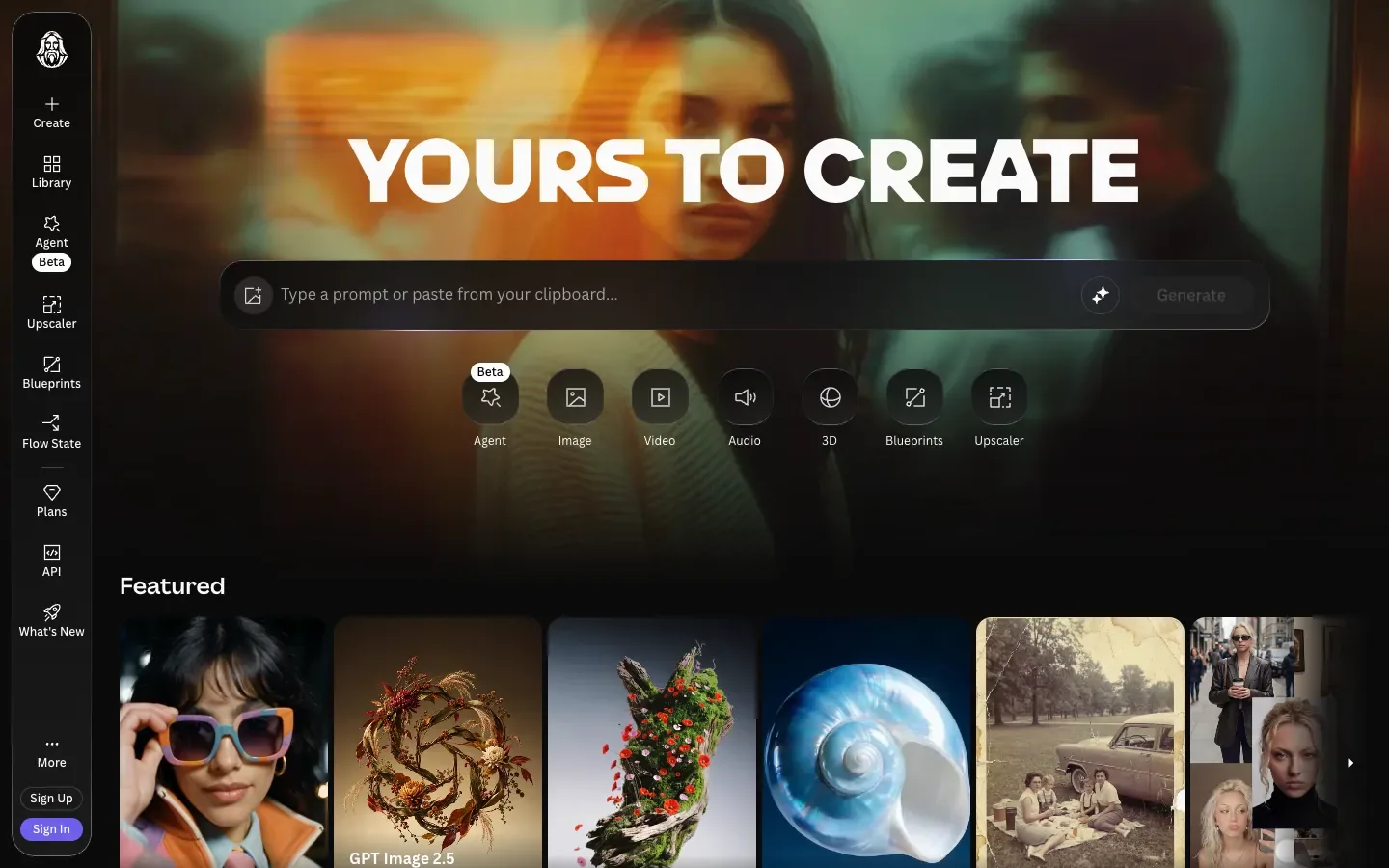
12. Leonardo: best inside a Canva workflow
Leonardo is owned by Canva and now ships to Canva Business and Enterprise teams. It covers image and video generation with consistent styles, and pairs naturally with Canva for posters, thumbnails and social cut-downs.
Choose Leonardo if your team already works in Canva and wants AI shots in the same place.
| Platform | Best for | Standout feature |
|---|---|---|
| Higgsfield | Best overall, complete studio | Cinema Studio, Soul ID, Popcorn, agent |
| Dreamina | Seedance 2.5 first | Seedance 2.5 launch home |
| Kling AI | Work that is mostly Kling | Kling 4.0: 30s, 4K HDR clips |
| Runway | Editing and refining | Generation inside a timeline |
| OpenArt | Long, consistent stories | Director: up to 5 continuous minutes |
| ImagineArt | Series and vertical drama | Film Studio, AI Drama Studio |
| Artlist | Pros licensing stock | AI shots next to music and footage |
| LTX Studio | Script-to-storyboard previz | Script becomes a full storyboard |
| InVideo | Agent-made films | Agent One and Agent Two |
| Magnific | Upscaling and finishing | Magnific upscaler |
| Krea | Finding the look | Real-time canvas across models |
| Leonardo | Canva teams | Lives inside Canva |
Get Exclusive Discounts to Best AI Filmmaking Tools
We negotiate exclusive discounts with AI companies for our readers. Subscribe to get the latest discounts and guides straight to your inbox.
How to choose
Pick by the film you are making, not the feature list:
One studio for everything, at the best value: Higgsfield.
Seedance 2.5 first: Dreamina.
Work that is mostly Kling: Kling AI.
Editing and refining AI footage: Runway.
A story with recurring characters: OpenArt Director.
Most filmmakers settle on one studio and add a second for the job it wins. Our step-by-step guide to making an AI short film walks through the full process, and Higgsfield alternatives covers who beats Higgsfield at specific jobs.
Best AI filmmaking platforms: frequently asked questions
What is the best AI filmmaking platform in 2026?
For most people, Higgsfield: it bundles storyboarding, consistent characters, directed shots and sound under one plan, with the leading models included. Dreamina is the place to get Seedance 2.5 first, Kling AI is best if your work is mostly Kling, and OpenArt Director is best for long, consistent stories.
What is the difference between a video model and a filmmaking platform?
A model, such as Kling 4.0 or Seedance 2.5, turns a prompt into a clip. A platform is a studio built around several models, with the tools that hold a film together: storyboards, character consistency, camera control, sound and editing.
Which AI video model is best for filmmaking?
Seedance 2.5 leads for prompt adherence, lip sync and cinematic shots, followed by Kling 4.0 for long 4K shots and Wan 3.0 for value. The best platforms let you switch between them per shot.
What is the cheapest AI video model?
Of the leading three, Wan 3.0. Alibaba lists it at $0.10 a second at 720p, and creators have called it the best value for the price. Our AI Price Index tracks what each model costs on every platform.
Can I make a full film with these platforms?
Short films, yes. OpenArt Director builds up to five continuous minutes, and Higgsfield, ImagineArt and LTX Studio all structure a project into scenes. Longer films are possible, but holding characters consistent across many scenes is still the hardest part.
The verdict
The platform is where you will spend your hours, so pick it by the work. Higgsfield is our top pick for AI filmmaking because it puts the whole pipeline, and the leading models, under one plan.
Dreamina is the place to get Seedance 2.5 first, Kling AI is the home of Kling 4.0, and OpenArt is the one for long stories. Then choose your model per shot: Seedance 2.5 for performance and cinematic shots, Kling 4.0 for long 4K takes, and Wan 3.0 when you need volume.
These AI filmmaking platforms ship new features almost every month, so check the current plans before you subscribe.